
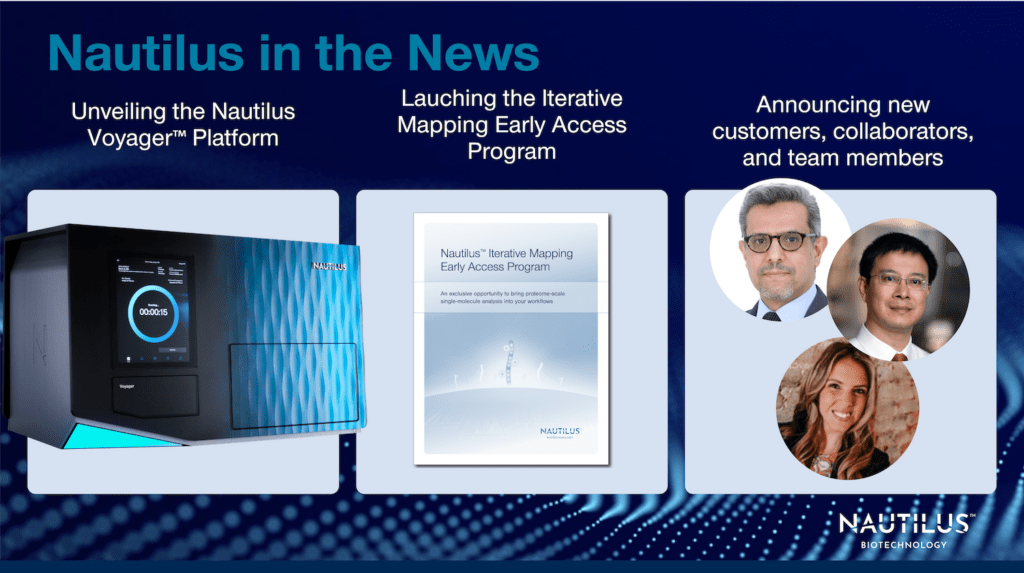
While every month is a busy one at Nautilus, the last few months have been an absolute whirlwind with the unveiling of the Nautilus Voyager™ Platform, the launch of the Iterative Mapping Early Access Program, and the announcement of our first customers and new collaborators.
Below, we share press releases and articles covering our exciting news from the last few months. If you’d like to join us as we reveal the proteomic landscape and revolutionize biology, be sure to participate in our Early Access Program!
Press Release: Nautilus Biotechnology Announces Baylor College of Medicine as First Early Access Program Customer for Voyager Platform
We recently announced that Baylor College of Medicine is the first customer of our Iterative Mapping Early Access Program!
In a study led by Baylor Professors Bing Zhang, Ph.D. and Yongchao Dou, Ph.D, researchers will leverage the Nautilus Voyager™ Platform to address a central challenge in cancer research – identifying aberrant protein isoforms that contribute to tumor growth, metastasis, immune evasion, and therapeutic resistance.
The study aims to develop a broadly accessible computational toolkit with improved detection of protein isoforms in conventional shotgun proteomics datasets. By pairing these computational approaches with full-length, isoform-resolved proteomic measurements generated on the Nautilus Voyager Platform, the project aims to enable direct comparison of transcriptional and proteomic changes at unprecedented resolution.
Read the full press release here.
Read a GEN article focused on the press release here.

Press Release: Nautilus Biotechnology Appoints Proteomics Commercial Leader Amber Faust as Vice President of Sales
We’re proud to announce that Amber Faust has joined the Nautilus team as Vice President of Global Sales! Amber comes to Nautilus with extensive experience leading and driving sales in the proteomics space, and we are excited to work with her to accelerate commercial progress of the Voyager Platform.
Read the full press release here.

Press Release: Nautilus Biotechnology Unveils Voyager Platform, Enabling Single-Molecule Iterative Mapping, at US HUPO 2026
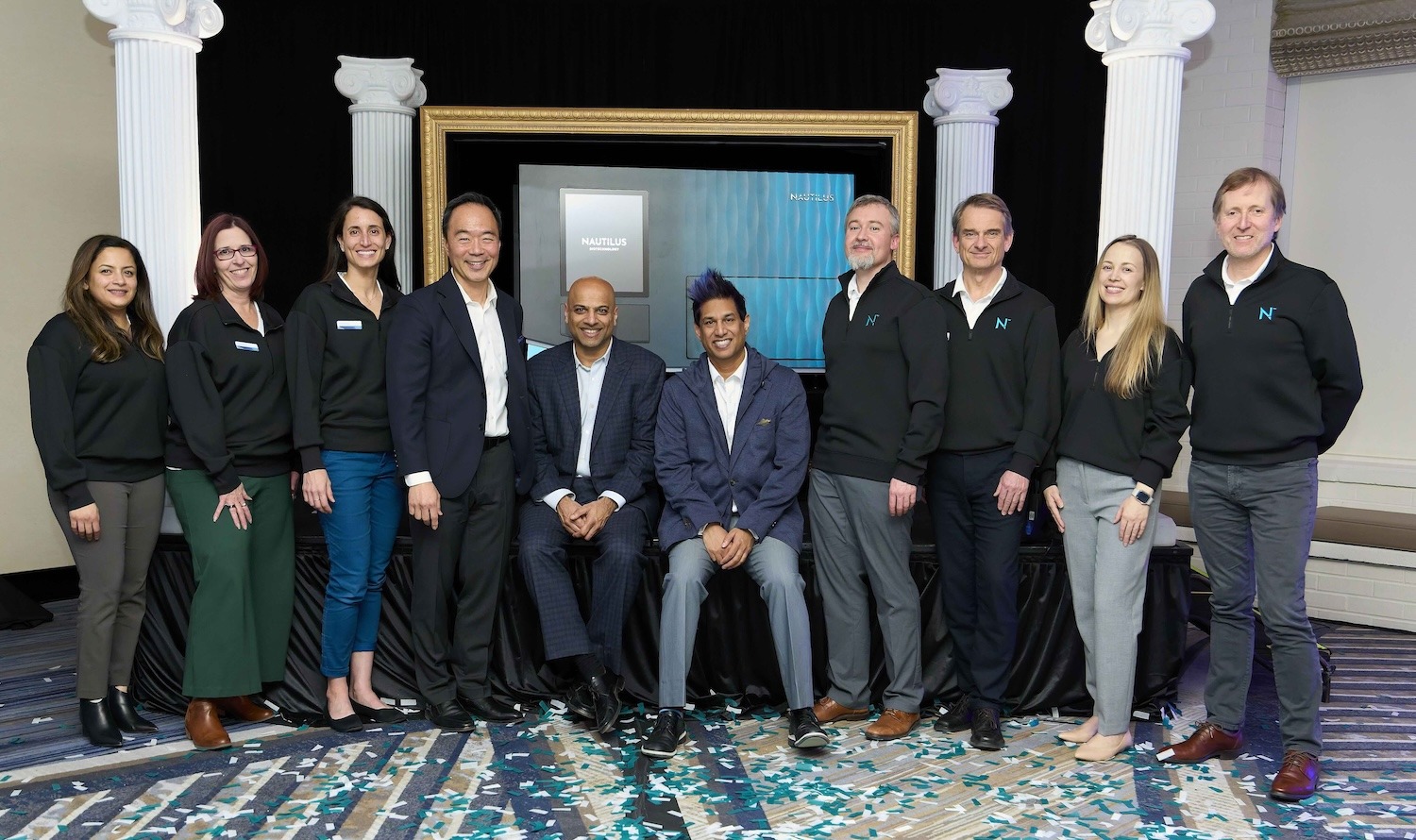
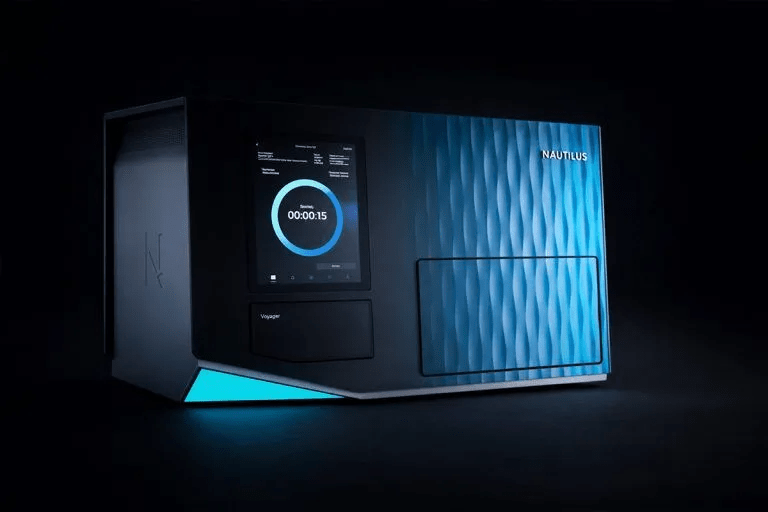
At US HUPO 2026, we unveiled the Nautilus Voyager™ Platform. The Platform consists of integrated reagents, fluidics, imaging, and ultra-dense nano-array flow cells enabling Iterative Mapping and cloud-based analysis of single-molecule data outputs. It is designed to occupy a typical lab benchtop with standard facility requirements – no bespoke gas or fluidic connections needed.
The Voyager Platform is the result of Nautilus’ unique cross-disciplinary approach to protein analysis, combining integrated reagents, fluidics, imaging, ultra-dense nano-array flow cells, and machine learning-powered algorithms, to enable Iterative Mapping and deliver on the full potential of proteomics.
Read the full press release here and learn more about our magical unveiling event at US HUPO 2026 here.
Longevity.Technology Article: Nautilus debuts Voyager platform in push toward next-gen proteomics
In this Longevity.Technology article, Kyle Umpig covers the unveiling of the Voyager™ Platform at US HUPO 2026 after successful field evaluation in Birgit Schilling’s Lab at the Buck Institute for Research on Aging. He uses the following helpful analogy to describe how the platform leverages Iterative Mapping to enable researchers to study the proteome with exceptional coverage and detail:
“…imagine trying to understand a city by listening to crowd noise from a distance. You get volume, not detail. Voyager moves closer, listening to individual voices – at scale.”
He further explores how the Voyager Platform may advance research on aging and longevity by democratizing proteomics and uncovering the key proteins and proteoforms at play in these processes.
We are excited to see how researchers use the Voyager Platform to uncover the molecular mechanisms underlying aging, dementia, and all manner of diseases!
Read the full article here.
Press Release: Nautilus Biotechnology and Weill Cornell Medicine-Qatar Collaborate with The Michael J. Fox Foundation to Advance Single-Molecule Proteomics Research in Parkinson’s Disease
We recently joined Weill Cornell Medicine-Qater and the Michael J. Fox Foundation (MJFF) to announce a research collaboration to study the connection between the alpha-synuclein (aSyn) protein and Parkinson’s disease (PD). Supported by a $1.6 million research grant from MJFF, the high-impact project combines Professor Hilal Lashuel’s expertise in the molecular and chemical biology of neurodegeneration with Nautilus’ next-generation platform for measuring proteins and their functional variants, called proteoforms, at single-molecule resolution.
Read the full press release here.

GEN Article: Nautilus, Weill Cornell Team Up to Apply Single Molecule Proteomics Tech to Parkinson’s
In this article, GEN covers our Michael J. Fox Foundation-funded collaboration with Professor Hilal Lashuel, Ph.D. at Weill Cornell Medicine-Qatar to study the role of alpha-synuclein proteoforms in Parkinson’s disease. This section in the article featuring commentary from Professor Lashuel sums up the potential impact of this work nicely:
“Deciphering alpha-synuclein proteoforms at the single-molecule level holds tremendous promise for advancing Parkinson’s disease diagnostics and therapies,” said Lashuel, adding that the partners plan to develop “innovative assays and technologies that will enable precise mapping of the post-translational modification signatures of alpha-synuclein in health and neurodegenerative disease.”
We look forward to sharing more from this collaboration as it progresses.
Read the full article here.
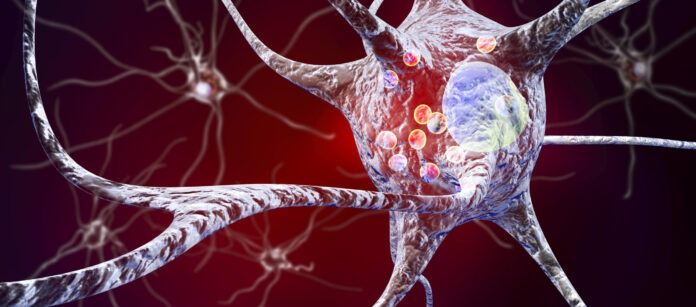
Press Release: Nautilus Biotechnology Launches Early Access Program for Novel Single-Molecule Proteomics Platform, Starting with Tau Proteoforms Assay
Nautilus’ Iterative Mapping Early Access Program gives researchers the unique opportunity to employ the Voyager™ Platform in their research.
The initial fee-for-service offering through the program enables researchers to be among the first to deeply explore the human tau protein by quantifying up to 768 full-length tau proteoforms in their samples of interest. Studying these previously inaccessible forms of the tau protein may be critical to understanding neurodegenerative diseases as well as developing novel biomarkers and precision medicines.
We encourage all researchers interested in single-molecule proteomic analysis to apply to be a part of the program even if their work does not involve tau – we plan to expand the capabilities available through the program throughout the year and space is limited.
Read the full press release here.
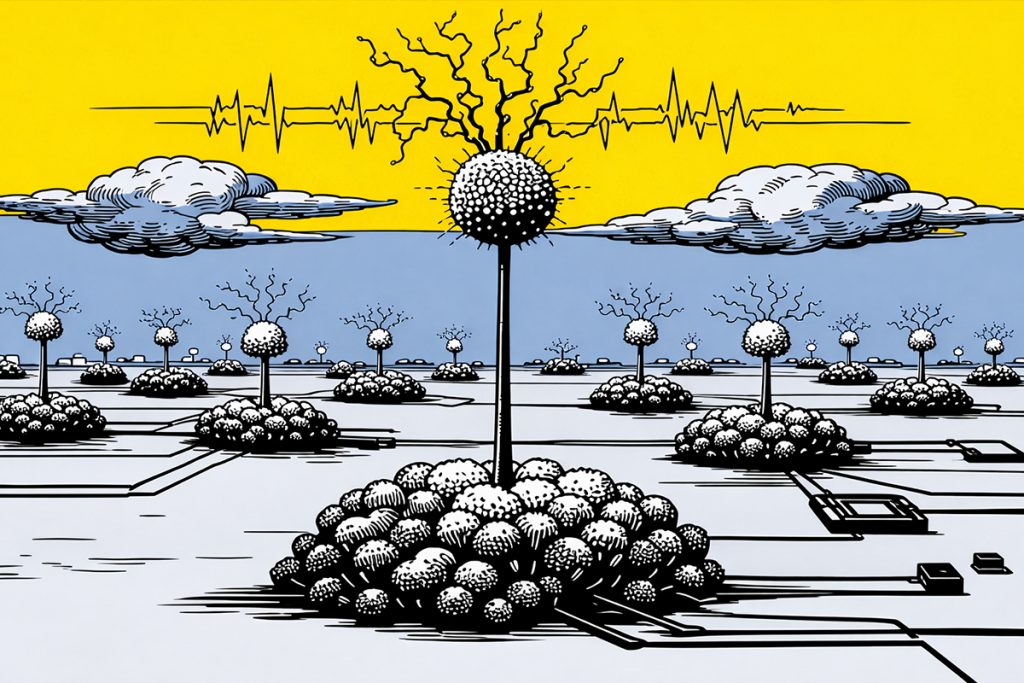
Longevity.Technology article: Proteomics platform to accelerate Alzheimer’s research
Check out this article in Longevity.Technology to discover how participating in our Iterative Mapping Early Access Program can help you discover critical new aspects of protein biology.
A great couple of lines toward the end of the article sum it up well:
“Proteins are where the rubber meets the road, where genes meet function and biology becomes action. Tools like Nautilus’ single-molecule platform don’t just make research faster or more precise; they offer a window into the hidden choreography of aging itself.”
Read the full article here.
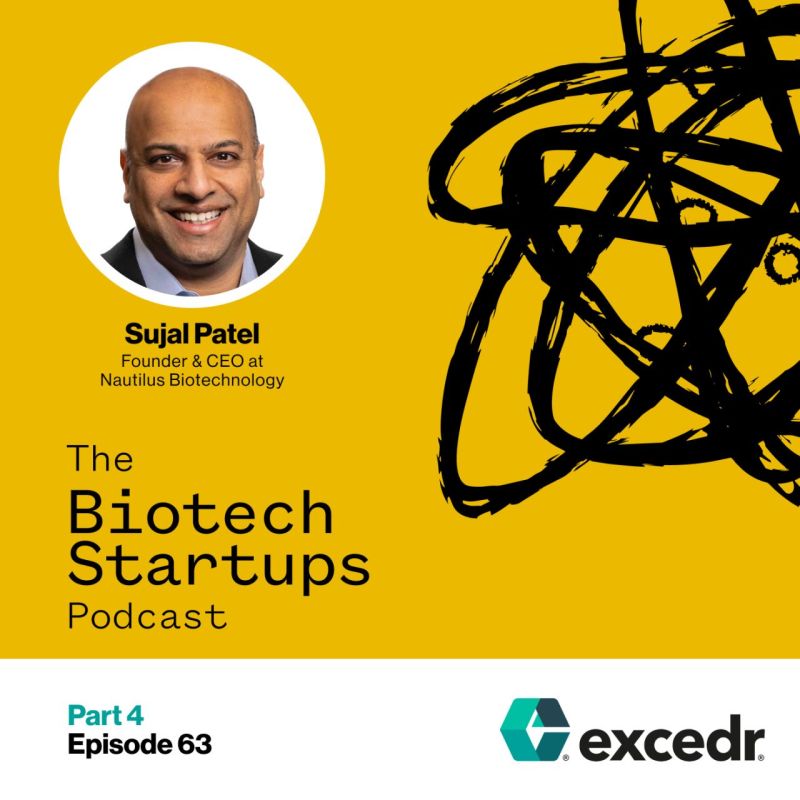
The Biotech Startups Podcast: You Don’t See the Path, You Take the Next Step with Sujal Patel
For a great summary of our incredible progress over the last 9 years and to discover how we’re entering the market with our Iterative Mapping Early Access Program, check out this episode of The Biotech Startups Podcast featuring Nautilus Co-Founder and CEO Sujal Patel.
Some highlights:
- 4 key technological advances that Sujal believes will make Nautilus successful
- How Sujal applies his previous startup experience to drive progress at Nautilus
- What’s in store for Nautilus over the next few years
Find the podcast here:
MORE ARTICLES