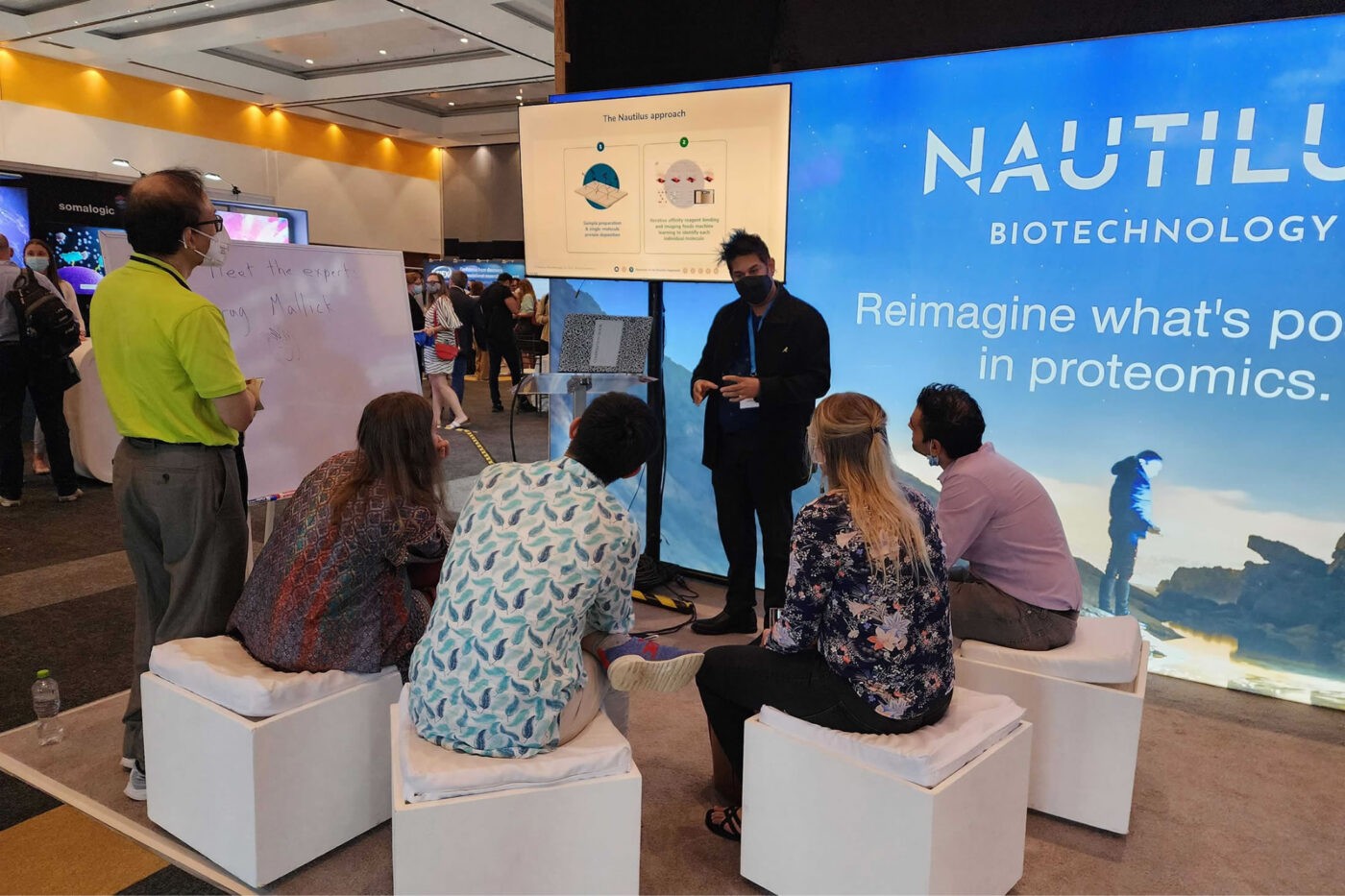

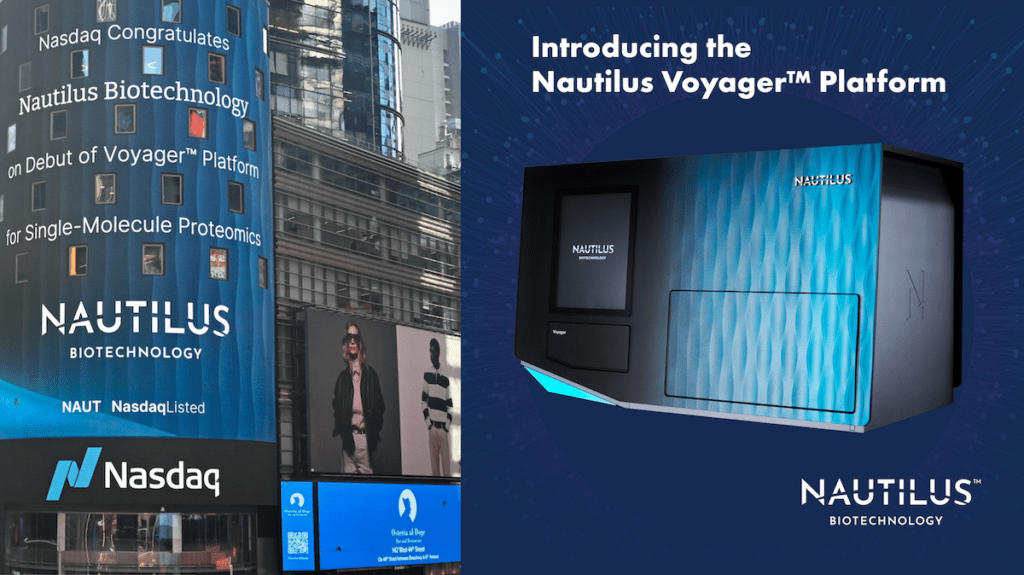
The Nautilus Voyager™ Platform is an all-in-one system for comprehensive single-molecule proteomic analysis. We recently unveiled the Voyager Platform to the proteomics community at an after-hours event at US HUPO 2026 titled, “A magical evening with Nautilus at US HUPO 2026,” and it’s debut was featured on the Nasdaq building in Times Square! We discuss some of what made the event “magical” here.
The Voyager Platform consists of integrated reagents, fluidics, imaging, and ultra-dense nano-array flow cells enabling Iterative Mapping and cloud-based analysis of single-molecule data outputs. It is designed to occupy a typical lab benchtop with standard facility requirements – no bespoke gas or fluidic connections needed.
At the unveiling event, previous US HUPO president, Executive Director of the Biodesign Institute at ASU, and Nautilus Scientific Advisory Board member, Professor Joshua LaBaer, placed the development of the Voyager Platform into the broader context of proteomics history. He discussed how the single-molecule analysis capabilities of the platform will provide more accurate views of biology that “predict disease states and tell us about biology in a way we have never known before.”

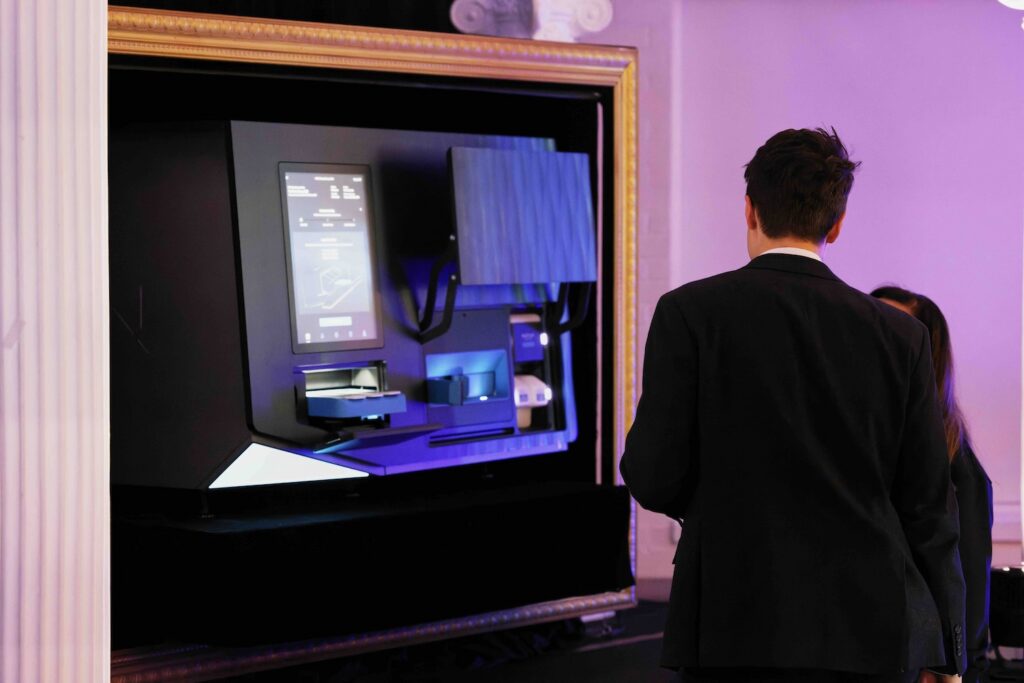
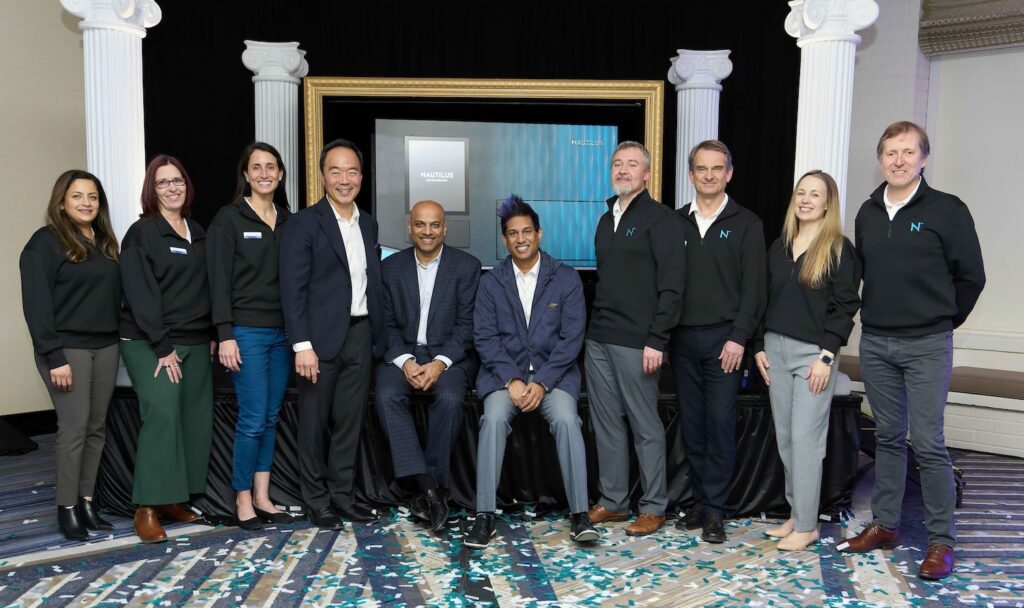
After Professor LaBear’s kind remarks, Nautilus Co-Founder and Chief Scientist Parag Mallick leaned into his skills as a professional magician to make the Nautilus Voyager appear in a blank frame on-stage. This gave the event’s attendees a first look at the instrument, and Nautilus team members were on-site to walk them through how the Voyager Platform works to enable Iterative Mapping. Later, attendees booked demos with the instrument so they could see it in action for themselves.
Thank you to everyone who made it out to the event and who engaged deeply with the Voyager Platform during the demos! You made the celebration of this milestone truly special.

What does the VoyagerTM Platform do?
In brief, each Voyager Instrument is designed to accommodate the analysis of up to 10 billion single protein molecules spread across three Voyager Flow Cells in a single run. These flow cells contain ultra-dense nanoarrays for protein deposition. Intact, single-molecule protein libraries are prepared in streamlined, off-platform workflows, loaded in sample plates, and inserted into the instrument for automated deposition and analysis on the flow cells.
All the components of the Voyager Platform come together to enable Iterative Mapping. In this method, millions to billions of intact protein molecules are captured and displayed on the flow cells. Then, fluorescent probes that bind features indicative of protein or proteoform identity are sequentially added to the array, and multiple probe-protein binding events are recorded for every individual protein molecule. After tens to hundreds of unique probe binding cycles, machine learning-powered algorithms convert the probe binding patterns into confident protein and proteoform identifications that are simply counted for quantification.
Once proteins and proteoforms have been quantified using Iterative Mapping, single-molecule counts are made available in the cloud for analysis or download as simple .CSV files. In the data analysis portal, these tables of counts can be further analyzed to uncover novel biology and visualize findings with standard volcano plots, heat maps, and upset plots.
Be one of the first to use the VoyagerTM Platform in your research
Once the magic trick was complete, Nautilus Co-Founder and CEO Sujal Patel shared how proud he was that Nautilus has achieved this critical milestone. The unveiling of the Voyager Platform represents that culmination of nearly a decade of tremendously hard work, and everyone at Nautilus is excited to finally be able to both showoff the Voyager instrument and invite scientists to use it in their research.
In that spirit, if you’d like to bring the magic of single-molecule proteomic analysis into your lab, please join the Iterative Mapping Early Access Program today. Through this program, we are excited to work with you to analyze your samples of interest at the single-molecule level. While spaces are limited, we will be expanding our capabilities as well as the assays available through the program throughout 2026 and cannot wait to work with you!
MORE ARTICLES