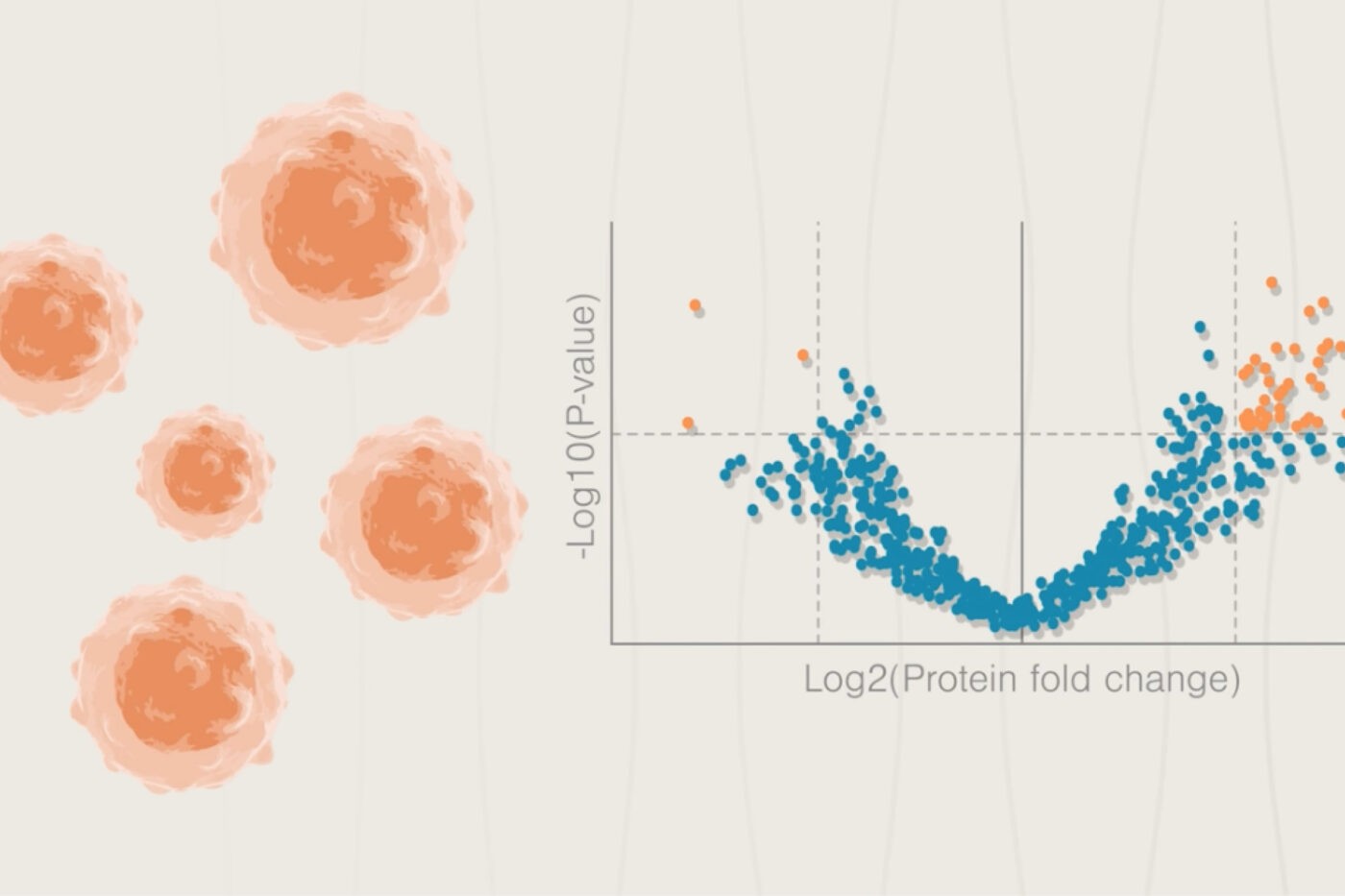
Meet the first Iterative Mapping Grant Program – Oncology awardee: Professor Terence M. Williams, M.D., Ph.D.

Nautilus Biotechnology
November 20, 2026
We launched the Iterative Mapping Grant Program – Oncology in late September to provide a select group of researchers access to the Iterative Mapping Early Access Program at no charge. Through the program, these researchers will analyze 12 samples on the Nautilus Voyager™ Platform with either the AKT1 or EGFR Proteoforms Assay.
We received many excellent applications covering an impressive diversity of projects focused on the roles these proteins play in proliferative signaling, cancer development, and therapeutic resistance. Today we’re proud to announce the first awardee from this round of the program: Professor Terence Williams, M.D., Ph.D. from City of Hope.
Read on to discover how Terence plans to use the AKT1 Proteoforms Assay to reveal how AKT1 proteoforms contribute to radiation resistance in lung cancer.

AKT1 proteoforms and lung cancer resistance to radiotherapy
While radiation therapy is a frontline treatment for lung cancer, resistant tumors often arise, leading to poor clinical outcomes. The Williams Lab previously developed patient-derived xenograft models of radiation-resistant lung cancer and showed that levels of AKT phosphorylated at S473 and/or T308 increase when radiation resistance develops. Similar results were observed in other models. This PTM-level analysis strongly implicated AKT signaling in resistance but did not show which AKT proteoforms or distinct versions of AKT “activation” contribute to resistance.
Professor Williams will use the AKT1 Proteoforms Assay to quantify how patterns of phosphorylation found on AKT1 proteoforms change as lung cancer cells go from sensitive to resistant. He will compare the AKT1 proteoforms found in two different patient-derived lung cancer organoids:
- Before they are radiation resistant.
- After they become resistant through serial radiation treatment.
Professor Williams hopes this work will reveal the specific AKT1 molecular states driving resistance.
The patient-derived organoids used in this work recapitulate many aspects of cancer biology, including tumor architecture, cellular heterogeneity, and treatment response. The should better approximate patient biology than more traditional models. Ultimately, this work may identify novel drivers of treatment failure that can be developed into biomarkers and therapeutic targets.
Terence on why he’s excited to participate in the Iterative Mapping Grant Program
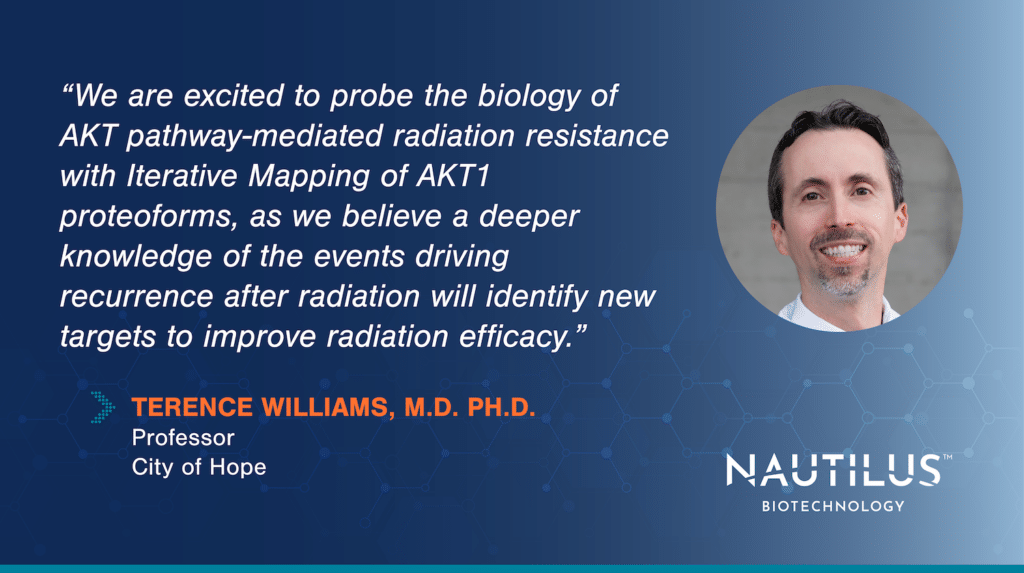
We are excited to probe the biology of AKT pathway-mediated radiation resistance with Iterative Mapping of AKT1 proteoforms, as we believe a deeper knowledge of the events driving recurrence after radiation will identify new targets to improve radiation efficacy.
More from the Iterative Mapping Grant Program – Oncology
Congratulations again to Terence on his selection for an Iterative Mapping Grant! We will announce additional winners on a rolling basis. We cannot wait to see how proteoform analysis may expand our understanding of cancer biology and drive the development of novel biomarkers and therapeutics. Stay tuned!
Want to measure tau, AKT1, or EGFR proteoforms in your next project? Apply to join the Iterative Mapping Early Access Program.
All analysis services provided under this program are for research use only and not for use in diagnostic procedures.
MORE ARTICLES