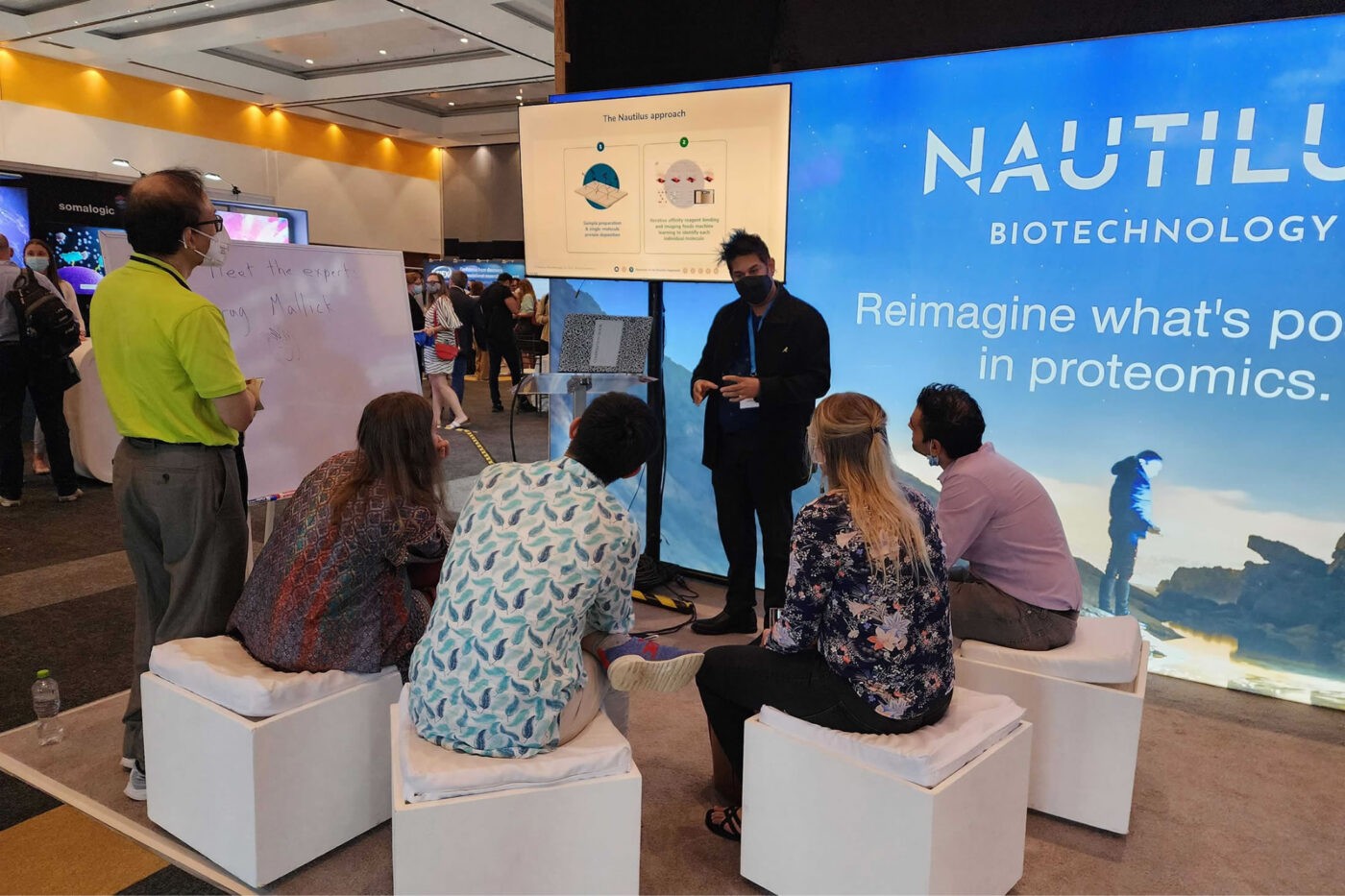
Nautilus Lunch Seminar at US HUPO 2026 – Revealing the proteomic landscape with Iterative Mapping

Nautilus Biotechnology
March 19, 2026
Professor Birgit Schilling from the Buck Institute for Research on Aging recently joined Sheri Wilcox, Nautilus VP of Scientific Engagement at our US HUPO 2026 lunch seminar. During the seminar, Birgit shared fascinating new single-molecule proteomic data that’s already beginning to deliver insights into Alzheimer Disease biology. In this blog post, we briefly outline the topics covered in the seminar.
Access a recording of our US HUPO 2026 lunch seminar here.
We are incredibly proud that researchers in the Schilling and Ellerby labs at the Buck Institute are already generating novel insights with the Nautilus VoyagerTM Platform and invite you to be one the first to generate similarly impactful data by joining our Iterative Mapping Early Access Program.
Iterative Mapping is designed to reveal the proteome
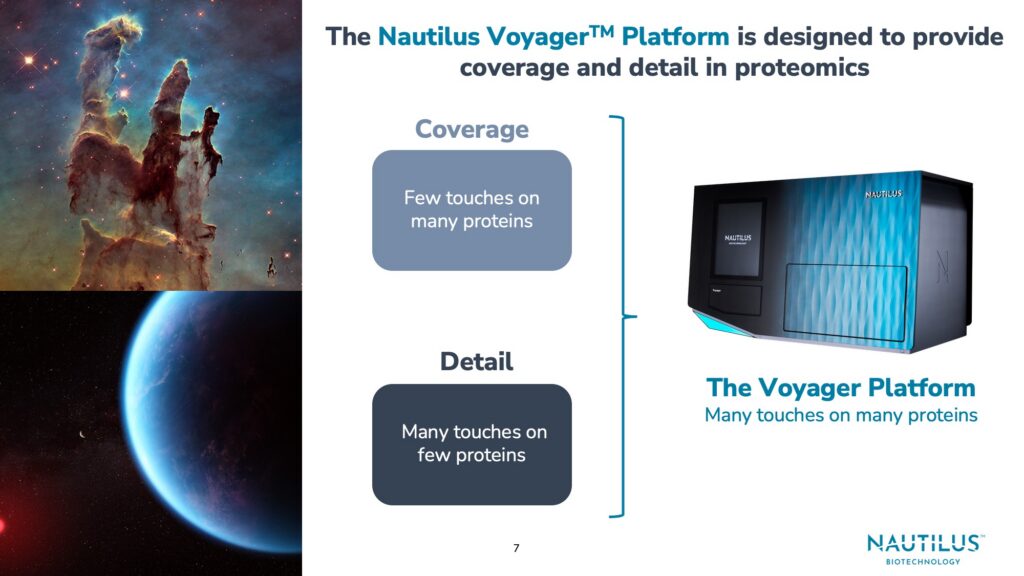
In her brief introductory section of the seminar, Sheri discussed how Iterative Mapping on the Nautilus Voyager Platform is designed to deliver comprehensive single-molecule views of the proteome. She covered how current technologies have done a great job of expanding their coverage in terms of the detection of canonical proteins (the ~20,000 proteins directly derived from genes) but rarely agree on the details. This can be seen in many studies that use an array of proteomics technologies to quantify proteinsin the same samples – the different technologies rarely agree.
Sheri speculates there may be interesting biological reasons for these discrepancies. For instance, other technologies may measure different parts of proteins, different isoforms, or different proteoforms. Because the Nautilus Voyager Platform uses Iterative Mapping to quantify proteins through the identification of many features found on single protein molecules, it is designed to deliver reproducible coverage and detail in every experiment. In contrast to most methods used today, Iterative Mapping quantifies proteins defined at the single-molecule level leaving researchers with highly resolved views of the entities quantified.
Sheri goes on to discuss how proteoform quantification is a key component of the detail delivered by the Voyager Platform. She further describes how the analysis of tau proteoforms is a powerful initial use case for the platform. The tau protein is known to come in many proteoforms, yet no technologies today can accessibly differentiate and quantify them. This is important because, while tau aggregation is associated with Alzheimer’s disease, it is not clear what forms of tau are correlated with cognitive decline and tau-targeted therapies have not been particularly effective to-date.
Birgit Schilling – Using the Voyager Platform to reveal novel tau biology
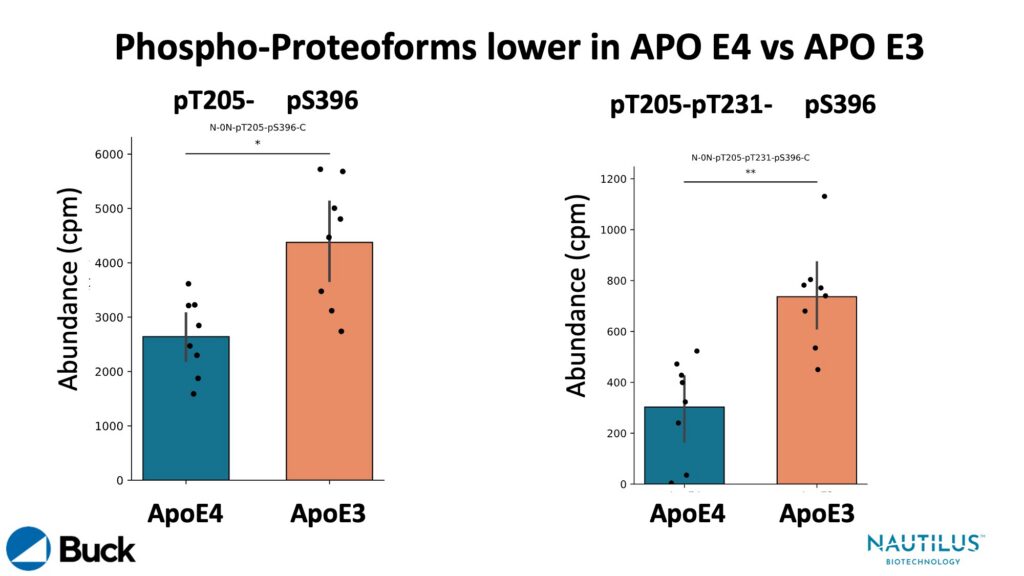
In the next portion of the seminar, Professor Birgit Schilling shared work from her lab and Lisa Ellerby’s lab at the Buck Institute for Research on Aging demonstrating the following:
- Tau proteoform analyses at the Buck deliver nearly identical results to those conducted at Nautilus. In other words, tau proteoform analyses on the Nautilus Voyager Platform are highly reproducible.
- The Nautilus Tau Proteoforms assay is revealing heterogeneity in the tau proteoform profiles of different brain regions in mouse models of aging. These diverse profiles may be linked to the biology of the different brain regions.
- iPSC-derived neurons with genotypes associated with varying levels of Alzheimer’s disease risk have different tau proteoform profiles. The tau proteoforms associated with the different genotypes may play important roles in Alzheimer’s and may one day become biomarkers or therapeutic targets.
This latter finding is particularly exciting because the differences observed were not evident when analyzing tau isoforms or phosphosite occupancies. These levels of protein biology are analyzed by standard proteomic analysis methods like western blots and mass spectrometry. The fact that these differences were only observed at the proteoform level provides strong initial evidence that single-molecule Iterative Mapping can reveal novel and important biology!
Be one of the first to use Iterative Mapping in your research!
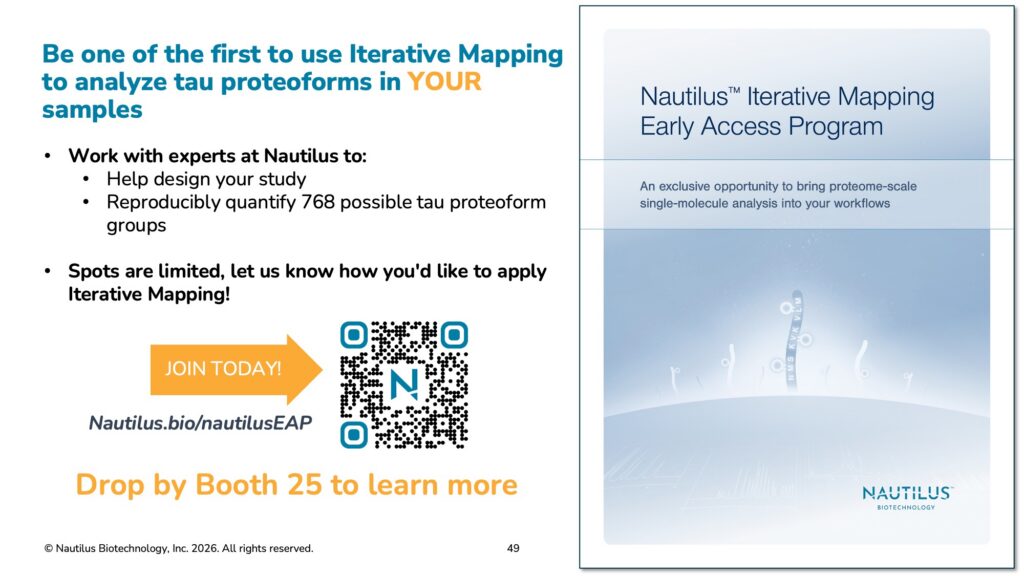
Sheri concluded the seminar by inviting attendees to join our Iterative Mapping Early Access Program. Through the program, we are excited to offer you the potential to be one of the first people to employ Iterative Mapping in your research. If you’d like to join the program and generate single-molecule proteomic insights into your biology of interest, submit a project description here.
Our first fee-for-service offering through the Iterative Mapping Early Access Program is our tau proteoforms assay, but we’ll be building additional capabilities throughout the year – we’d love to hear how you’d like to use Iterative Mapping even if you’re not studying tau. Please submit your project descriptions today as space in the program is limited!
MORE ARTICLES