Iterative Mapping Grant Program

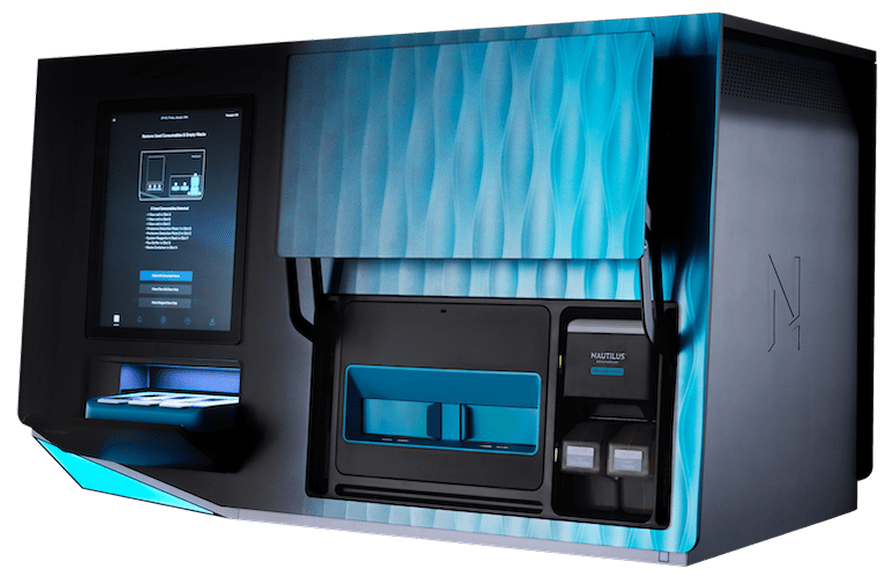
The Iterative Mapping Grant Program is your chance to get free access to single-molecule proteomic analysis on the Nautilus Voyager™ Platform. Grant awardees will participate in the Iterative Mapping Early Access program at no charge and have 12 of their samples analyzed using the Nautilus Tau Proteoforms Assay.

The assay can quantify up to 768 full-length tau proteoforms at the single-molecule level. These proteoforms are defined by their isoform identities (0N3R, 0N4R, 1N3R, 1N4R, 2N3R, or 2N4R) and phosphorylation statuses at the sites shown here.

  • T181
  • T205
  • T217
  • S396
  • S202/T205
  • S214
  • T231

The Nautilus Tau Proteoforms Assay reveals what combinations of proteoform-defining features are found on each tau molecule in your samples. Those molecules with the same combinations of features are considered the same proteoforms and are counted for quantification. Unique proteoforms and proteoform profiles may drive processes critical to neurodegenerative disease progression, but no platforms have been able to quantify them at scale until now.

To participate in the program, submit your project proposal using the form found here.

Additional details below and full terms and conditions here.

Iterative Mapping Grant Program project proposal submission form

*Indicates a required field.

Additional details

Through the Iterative Mapping Grant Program, 3 awardees will participate in the Iterative Mapping Early Access Program at no charge. The winners will receive:

Analysis of 12 samples

Analysis of 12 samples (acceptable sample types and requirements are listed below) using the Nautilus Tau Proteoforms Assay run through Nautilus Proteomics Analysis Services.

Experimental design assistance

Experimental design assistance in collaboration with Nautilus Scientists.

Final tau proteoform data report

A final tau proteoform data report in an easy-to-interpret format developed in collaboration with Nautilus Scientists.

Conference support

Support to present data at a mutually agreed-upon conference.

Publication assistance

Publication writing assistance for a peer-reviewed journal submission.

To be eligible for this grant, applicants must:

  • Submit a description of a 12-sample project by July 31, 2026 using the form above.
  • Have samples that meet program specifications available for shipment within 3 months (by November 30th, 2026).
  • Consent to allow Nautilus to announce that they are recipients of an Iterative Mapping Grant.
  • Consent to allow Nautilus to reference their work and data in grantee-approved marketing materials.
Winning grant submissions will be selected at the sole discretion of Nautilus Biotechnology.

Acceptable sample specifications

Samples must be derived from one of the following acceptable sources:
  • Human brain tissue
  • Humanized mouse brain tissue (expressing human tau)
  • Human brain organoids
  • Human multicellular integrated brain models derived from iPSC’s (miBrains)
  • Cultured cell lines
Samples must fall into one of the following types:
  • Fresh frozen brain tissues samples
  • Lysates or extracts prepared from brain tissue in an acceptable buffer*
  • Lysates of cells or organoids from cultures in an acceptable buffer*
*Acceptable buffers:
  • RIPA lysis buffer (25 mM Tris-HCl, 150 mM NaCl, 1% NP-40, 1% sodium deoxycholate, 0.1% SDS, pH 8)
  • 2% SDS, 20 mM HEPES, pH 6.8
The amount of material required depends on the sample type.

Please contact marketing@nautilus.bio if you have questions about the requirements for your samples.

Example project ideas

Acceptable projects might focus on (non-exhaustive list):

Differentiating tauopathies through their tau proteoform profiles.
Identifying tau proteoforms that are more likely to seed aggregation and/or spread between neurons.
Identifying tau proteoforms produced during clearly defined stages of a tauopathy.
Identifying what tau proteoforms interact with proteins known to be important in neurodegeneration or neurodegenerative disease.
Identifying tau proteoforms associated with disease risk variants.
Identifying tau proteoforms produce in response to disease-associated environmental factors.

All analysis services provided under this program are intended FOR RESEARCH USE ONLY and NOT FOR USE IN DIAGNOSTIC PROCEDURES.

Frequently asked questions

Who do I contact if I have more questions about my entry before I submit my applications?

Please email marketing@nautilus.bio, and we will contact you directly to discuss your entry.

When will I know if I have been selected to receive an Iterative Mapping Grant?

Winners will be announced on or before August 14, 2026.

How and where do I provide my samples?

Samples will be shipped to Nautilus Biotechnology’s Proteomics Analysis Services team in San Carlos, California. Specific shipping instructions and expectations will be discussed during an intact call.

Interested in joining our team?