
Iterative Mapping makes a splash – Nautilus in the News

Nautilus Biotechnology
October 2, 2025
With the release of our preprint focused on Iterative Mapping of tau proteoforms, we’ve received a tremendous amount of positive feedback, requests for collaboration, and interest from reporters. Below, you’ll find links to articles discussing our recent agreement with the Allen Institute, how our novel platform stacks up against other proteomics technologies, and the potential for a proteoform-powered era of precision medicine.
Applying Iterative Mapping to learn more about Alzheimer’s disease
In a recent Technology Networks article, Senior Science Writer Molly Coddington speaks with our own Parag Mallick and the Allen Institute’s Kyle Travaglini to learn how researchers at the Allen Institute will use Iterative Mapping to study tau proteoforms with the goal of charting their progression across various stages of Alzheimer’s disease. Read the article to discover why it’s so important to study tau proteoforms, how Iterative Mapping makes it possible to study tau proteoforms with unprecedented resolution, and how work like this may enable the development of precision medicines and diagnostics for Alzheimer’s.
One of the many reasons we’re excited to work with the Allen Institute on this project is its potential to have tremendously positive impacts on Alzheimer’s patients and their families.
Read our preprint covering Iterative Mapping of tau proteoforms

Iterative Mapping: a key player in next-generation proteomics
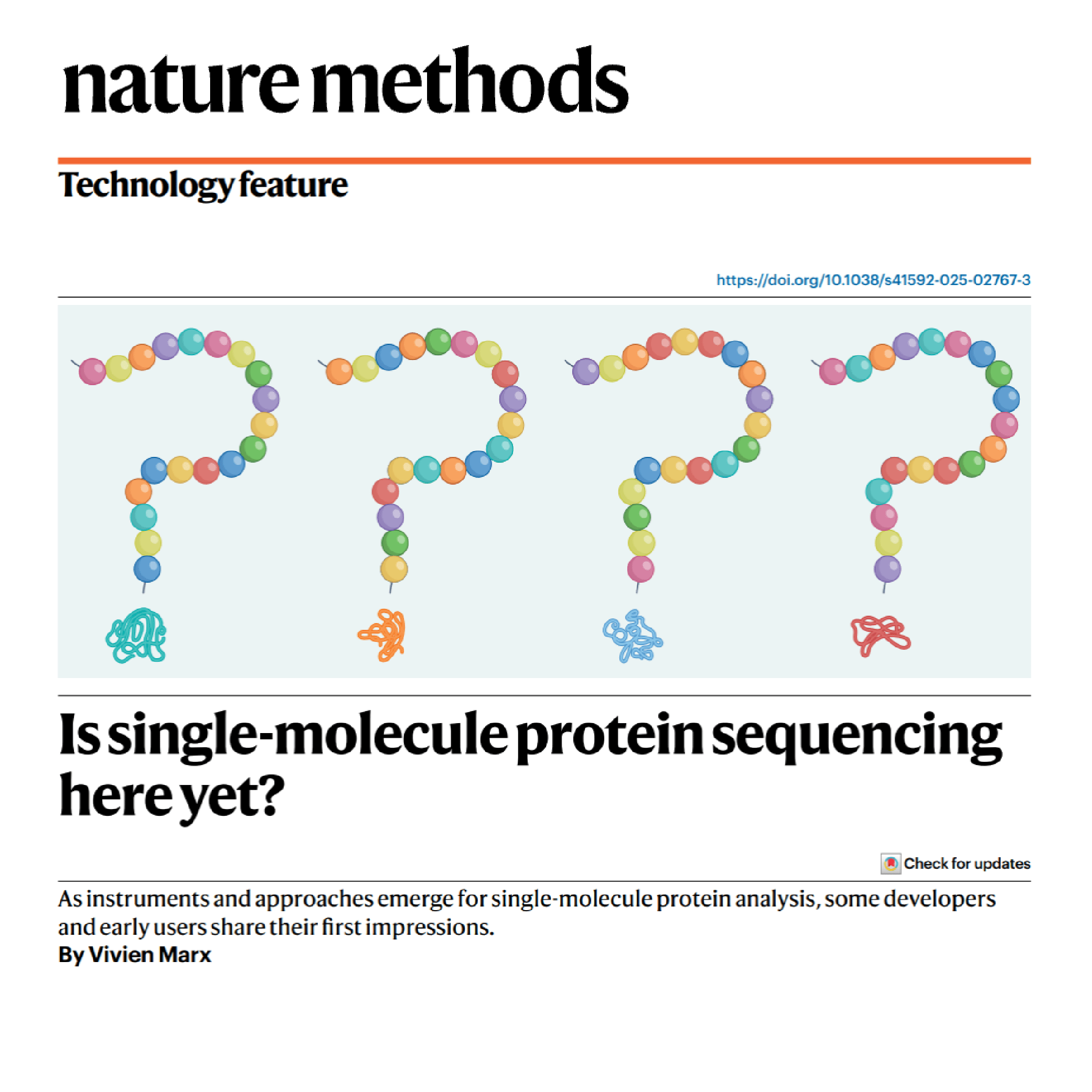
In this Nature Methods article, journalist Vivien Marx explores the question “Is single-molecule protein sequencing here yet?” She covers technologies ranging from our own Iterative Mapping, to peptide sequencing, to nanopore-based sequencing and speaks with early users to get their first impressions. Iterative Mapping is not technically protein sequencing, but Vivien quotes our own Parag Mallick as well as Professor Joel Blanchard from Mt. Sinai to dig into the details of how Iterative Mapping works and how it’s already advancing our understanding of tau proteoforms in Alzheimer’s disease.
It’s great to see Iterative Mapping and the Nautilus Platform prominently featured in the pantheon of up-and-coming proteomics technologies!
The potential for Iterative Mapping to advance precision medicine
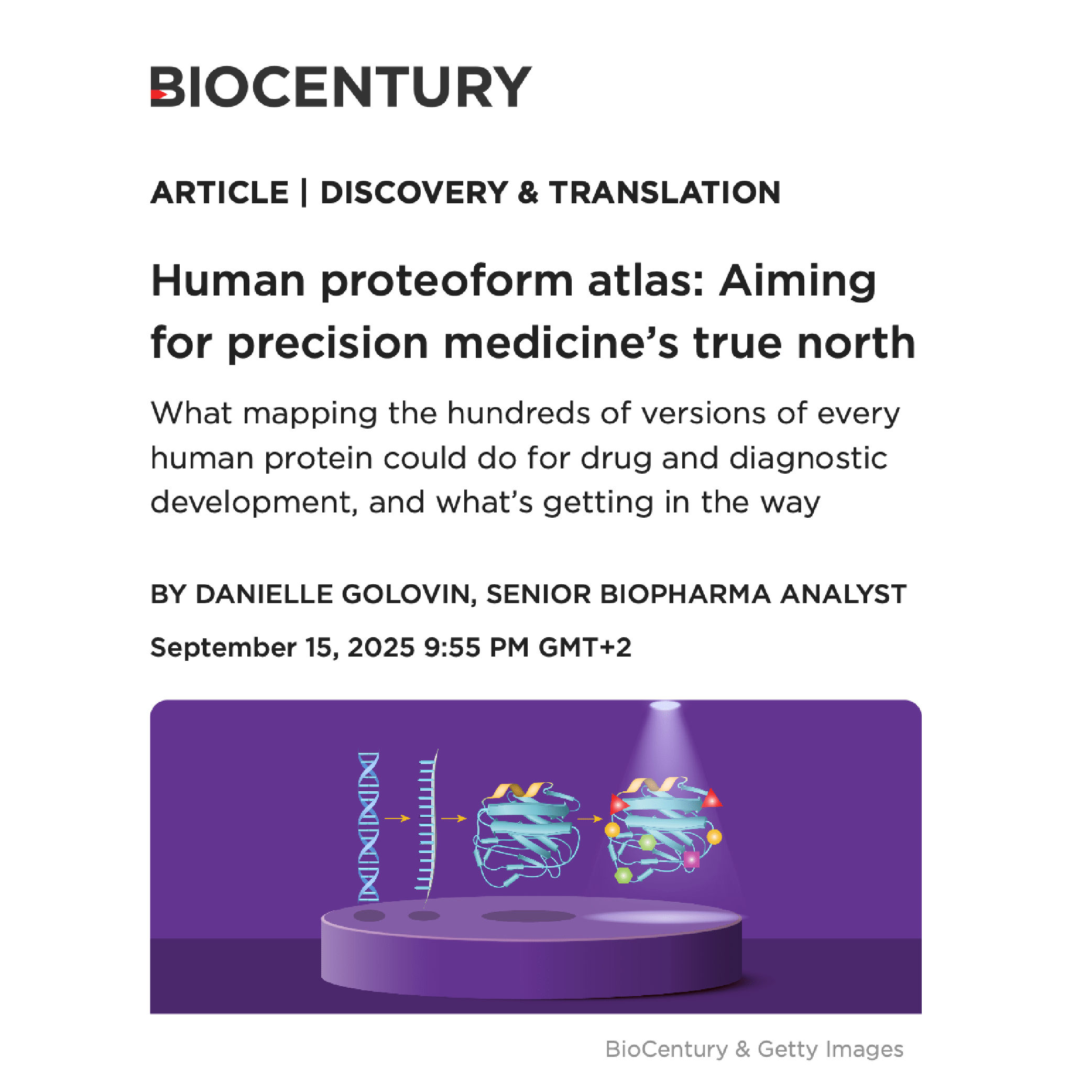
Proteoforms have the potential to guide the development of next-generation precision medicines. By identifying proteoforms underlying the mechanisms of disease, researchers may be able to develop disease-specific drug targets and biomarkers uniquely associated with different stages of disease progression. In this Biocentury article, Senior Biopharma Analyst Danielle Golovin shares perspectives from Professor Neil Kelleher at Northwestern University and Professor Benjamin Cravatt at Scripps – two key leaders in proteoform research. They cover why proteoform analyses have such tremendous potential to advance precision medicine and why we need new technologies to study them. Daniele introduces Nautilus as a company pushing the boundaries of proteome profiling and covers how our technology quantifies proteoforms at the single-molecule level.
We are proud to be pushing boundaries in proteoform research and look forward to working with leaders in this field to usher in a new era of proteoform-based precision medicines.
Learn how proteoform profiles may differentiate disease phenotypes
MORE ARTICLES